
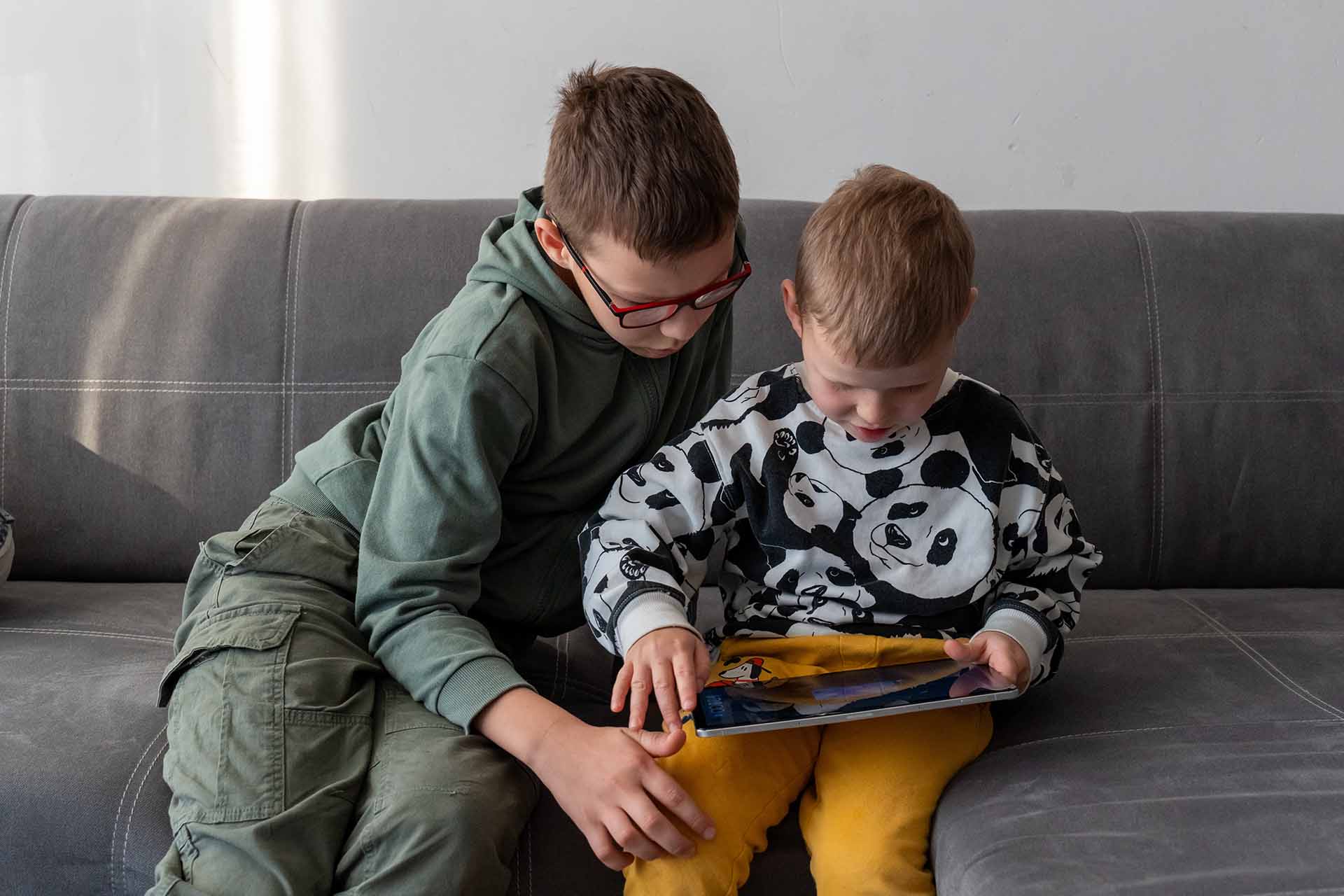
When a child faces a serious illness, the entire family’s world shifts. As parents, your attention naturally turns to the child who needs medical care, and rightfully so. But in the midst of hospital visits, treatment decisions, and the overwhelming emotions that come with your child’s diagnosis, it’s easy to overlook another truth: your other children are going through this too.
Siblings of seriously ill children often become the quiet witnesses to their family’s crisis. They may not fully understand what’s happening, but they feel everything, the fear, the changes in routine, the tension in the house, and sometimes the loneliness of watching their parents’ focus shift away from them. At Cardinal Kids, Carolina Caring’s pediatric palliative care program, we’ve walked alongside countless families through these challenges. We know that caring for the whole family, including siblings, isn’t just important. It’s essential.
If your family is navigating a child’s serious illness, you’re not alone in wondering how to support all of your children through this journey. Let’s talk about how to recognize what siblings are experiencing and practical ways to help them feel seen, heard, and loved during one of the most difficult times your family will face.
How Serious Illness Changes Family Dynamics
When one child becomes seriously ill, family life transforms in ways both visible and invisible. Understanding these changes can help you recognize what your other children might be experiencing.
Attention and Time Shift Medical appointments, hospital stays, and caregiving responsibilities consume enormous amounts of time and energy. Siblings may suddenly find themselves with less one-on-one time with parents, missing out on activities they used to enjoy, or staying with relatives more often. Even when you’re physically present, your emotional availability may be limited by worry and exhaustion.
Roles and Responsibilities Change Healthy siblings may take on new responsibilities, helping with household chores, caring for younger siblings, or being more independent than their age would typically require. Some children rise to these challenges beautifully, but they may also feel burdened or resentful, even if they’d never say so out loud.
The Emotional Climate Shifts Homes dealing with serious childhood illness often feel different. There may be more sadness, more tension, more hushed conversations behind closed doors. Celebrations might be muted. Plans change suddenly. The predictability and security children need can feel shaken.
Siblings Feel What They Can’t Name Depending on their age, siblings might experience a complex mix of emotions they don’t have words for: fear for their brother or sister, worry about their parents, guilt over feeling jealous or angry, confusion about what’s happening, and loneliness. They may also feel like their own problems are too small to mention compared to what their sibling is going through.
What Siblings of Seriously Ill Children Experience
Every child processes their sibling’s illness differently, but certain experiences are remarkably common. Recognizing these patterns can help you understand and respond to what your other children need.
Fear and Anxiety Children worry. They worry their sibling will die. They worry their parents are too sad. They worry they might get sick too. Younger children may develop separation anxiety or new fears, while older children might worry about practical things like finances or their own future.
Guilt Many siblings feel guilty, for being healthy, for feeling angry or jealous, for not being able to fix things, or for wanting attention. Some children develop magical thinking, believing that something they did or thought caused their sibling’s illness.
Jealousy and Resentment It’s completely normal for siblings to feel jealous of the attention their ill brother or sister receives, even though they intellectually understand why. They may resent the disruptions to their own lives or feel angry that their needs come second. These feelings often come with shame, making children reluctant to express them.
Isolation and Loneliness Siblings may feel isolated from their family, from friends who don’t understand what they’re going through, and sometimes from the ill child whose life has diverged so dramatically from their own shared experiences.
Maturity Beyond Their Years Some siblings become remarkably mature, taking on adult-like responsibilities or suppressing their own needs to avoid burdening their parents. While this resilience is admirable, children still need to be children.
Behavioral Changes Watch for changes in behavior that signal distress: regression in younger children (bedwetting, thumb-sucking), academic problems, social withdrawal, acting out, physical complaints like headaches or stomachaches, sleep difficulties, or changes in eating patterns.
Age-Specific Considerations for Siblings
How siblings understand and react to their brother or sister’s illness varies significantly by age. Tailoring your approach to their developmental stage helps them process what’s happening.
Preschool Children (Ages 2-5) Young children think very concretely and may not understand that illness is different from being hurt. They might believe their sibling will get better soon or worry that being sick is contagious in simple ways. They’re very sensitive to changes in routine and separation from parents.
What helps: Simple, honest explanations using concrete terms. Maintain routines as much as possible. Offer extra physical affection. Use play to help them express feelings. Reassure them frequently that they didn’t cause the illness.
School-Age Children (Ages 6-11) Children this age are beginning to understand that illness can be serious and long-lasting, but they may not grasp the full implications. They’re concrete thinkers who want facts but may be frightened by medical details. They’re also increasingly aware of being different from their peers.
What helps: Age-appropriate information about the illness. Opportunities to ask questions. Maintaining their activities and friendships. Acknowledgment of their feelings. Specific ways they can help that make them feel useful without overwhelming them.
Adolescents (Ages 12-18) Teenagers can understand the full implications of serious illness, including the possibility of death. They may struggle with existential questions and fear for the future. They’re also at a developmental stage where independence and peer relationships are crucial, creating conflict when family needs demand their presence.
What helps: Honest, detailed information. Respect for their need for both involvement and independence. Permission to continue their own lives and activities. Safe spaces to express complicated emotions. Connection with other teens in similar situations.
Practical Ways to Support Siblings
Supporting siblings doesn’t require grand gestures or perfect parenting, it requires intentionality, even in small moments. Here are practical strategies that can make a real difference.
Maintain Open, Honest Communication Talk to your healthy children about what’s happening in age-appropriate ways. Avoid euphemisms that create confusion. Answer their questions honestly, and if you don’t know something, say so. Create regular opportunities for them to ask questions without other distractions.
Importantly, give them permission to share their feelings, all of them, including the uncomfortable ones like jealousy or anger. You might say, “It’s okay to feel mad that we had to cancel your birthday party. I understand that’s disappointing.”
Preserve One-on-One Time Even 15 minutes of dedicated attention can be powerful. Put away your phone. Focus entirely on them. Listen to them talk about their day, their friends, their interests, things that have nothing to do with illness. These moments remind them they still matter, they’re still seen, and their life still counts.
When possible, arrange for each parent to spend individual time with healthy siblings. Maybe one parent handles bedtime while the other stays with the ill child, then you switch the next night.
Keep Routines and Normalcy Where Possible Children find security in predictability. While you can’t control everything, try to maintain regular mealtimes, bedtimes, and weekly activities when feasible. Keep siblings involved in their sports, music lessons, time with friends, or whatever brings them joy.
Don’t cancel every plan when crises arise. Sometimes siblings need to go to their soccer game even when things are hard at home. It’s not about ignoring the situation, it’s about affirming that their life continues to matter.
Include Them (Appropriately) Many siblings feel better when they’re included in their brother or sister’s care in age-appropriate ways. This might mean visiting in the hospital, helping with simple care tasks at home, making cards for their sibling, or attending family meetings where treatment is discussed.
Always make inclusion voluntary, not mandatory. Some children want to be deeply involved; others need distance. Both responses are okay.
Watch for Signs of Distress Stay attuned to changes in behavior, mood, academic performance, or social connections. Remember that not all distress is obvious, some children become quieter and more compliant when they’re struggling. Regular check-ins help: “I’ve noticed you’ve been spending a lot of time alone. How are you doing with everything?”
Connect Them with Support Siblings benefit enormously from connecting with other children going through similar experiences. Ask Cardinal Kids about sibling support groups or activities. Talking with peers who truly understand can be incredibly validating.
School counselors can also provide support and help teachers understand what your child is experiencing. Don’t hesitate to share what’s happening with trusted teachers or coaches who can offer additional care and flexibility.
Take Care of Yourself This isn’t just about you, when you’re running on empty, you have less capacity to support any of your children. Accept help from family and friends. Use respite care when available. Acknowledge your own grief and stress. You can’t pour from an empty cup, and your children need you to be as whole as possible.
Maintaining Family Cohesion During Crisis
Serious illness can fragment families or bring them closer together. With intention, you can nurture connection even in the midst of crisis.
Create Shared Family Moments Look for small ways the whole family can be together. This might be a weekly family movie night at home, meals together when possible, or simple rituals like everyone sharing a high and low from their day. These moments remind everyone that you’re still a family unit, not just individuals managing a crisis.
Acknowledge the Whole Family’s Experience Talk about what your family is going through together. You might say, “This is really hard for all of us right now,” validating that everyone’s experience matters. Share your own feelings in age-appropriate ways, it models emotional honesty and reminds children they’re not alone in their struggles.
Celebrate When You Can Don’t put all joy on hold. Celebrate birthdays, even if they’re smaller than usual. Mark accomplishments. Find moments to laugh together. These celebrations aren’t ignoring reality, they’re affirming that life includes both sorrow and joy, and your family deserves both.
Plan for the Future Together When appropriate, involve the whole family in making memories or planning activities everyone can look forward to. This gives children hope and something positive to focus on beyond medical crises.
Recognize Each Child’s Unique Needs Avoid comparing children or expecting them to react the same way. One child might need to talk constantly while another processes privately. One might want to be at the hospital daily while another prefers to stay home. Honor these differences rather than forcing a one-size-fits-all approach.
How Cardinal Kids Supports Your Whole Family
At Cardinal Kids, our pediatric palliative care program understands that caring for a seriously ill child means caring for the entire family. We don’t just treat your child, we walk alongside your whole family through this journey.
Our team includes:
- Physicians and nurses who provide expert medical care and can answer your children’s questions in developmentally appropriate ways
- Social workers who offer counseling and support for siblings, help coordinate resources, and facilitate family meetings
- Child life specialists who use play, art, and other therapeutic techniques to help children process their experiences
- Chaplains who provide spiritual support and help families navigate difficult questions together
We can help:
- Facilitate conversations with siblings about their brother or sister’s illness
- Connect siblings with peer support groups
- Provide individual counseling for children struggling with the impact of their sibling’s illness
- Offer guidance on developmental considerations and age-appropriate communication
- Support family meetings where everyone’s voice is heard
- Connect your family with community resources and additional support services
We also recognize that siblings’ needs continue even after their brother or sister dies. Our bereavement support includes specialized grief counseling for children, helping them process loss and navigate life after their sibling’s death.
You're Not Alone in This
Supporting all of your children while one is seriously ill is one of the hardest things you’ll ever do. There will be days when you feel like you’re failing everyone, when you can’t be in two places at once, when guilt overwhelms you. Those feelings are normal. You’re doing something incredibly difficult, and you’re doing your best in an impossible situation.
Remember: Your children don’t need you to be perfect. They need you to be present, honest, and loving. They need to know that all of their feelings are valid, that they’re still important, and that your family will get through this together.
You don’t have to navigate this alone. The Cardinal Kids team at Carolina Caring is here to support your entire family, not just your seriously ill child, but all of your children, and you as parents too. We understand the unique challenges siblings face, and we have the expertise and resources to help.
If you’re concerned about how your healthy children are coping, or if you simply need guidance on supporting your whole family through this journey, reach out to us. Call Carolina Caring at 828.466.0466, and let us walk alongside your family. Because when one child is seriously ill, the whole family needs care, and we’re here to provide it.